
From high altitude to low level
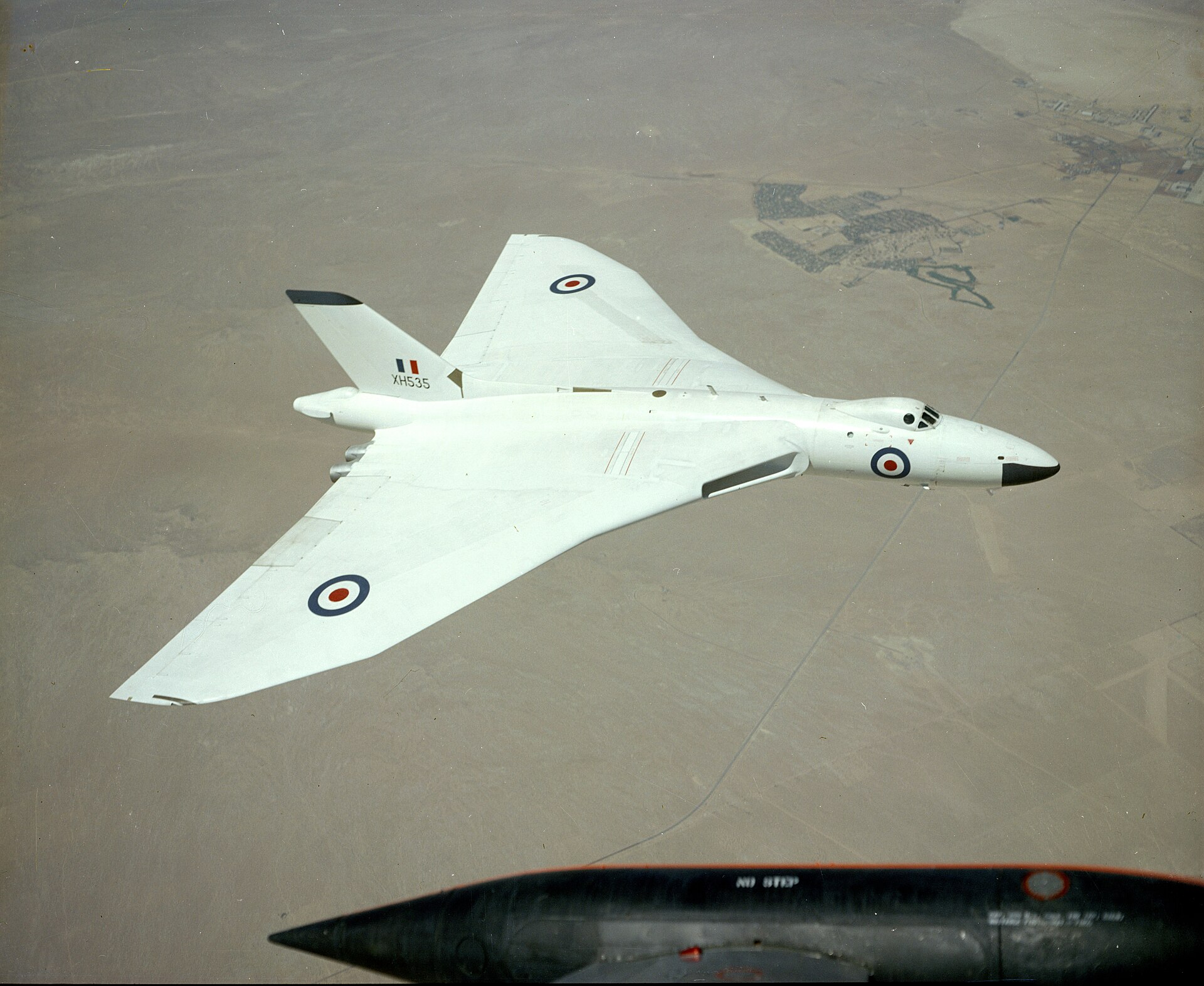
The Vulcan was designed to fly high. The war it was asked to train for, after about 1963, was low. That single change explains more about the surviving airframes — their paint, their nose thimbles, their fatigue stories — than any other operational decision.
What went wrong with height
High-altitude bombers assumed that speed and height defeated fighters and that flak was a Second World War problem. Surface-to-air missiles, especially after the political shock of shootdowns in the early 1960s, made the stratosphere look like a shooting gallery. A V-bomber on a steady high-level run was a predictable target. The RAF’s response, in line with other air forces, was to go down: use terrain masking, compress the defender’s radar horizon, and accept a brutal ride.
What the airframe felt
Low-level air is dense. Gusts are sharper. A large delta designed for smooth, high flight discovers fatigue. Inspection regimes tightened; some aircraft were worked harder than others. Camouflage replaced anti-flash white on the upper surfaces because you were now trying not to be seen from above, not trying to reflect a nuclear flash from below.
What the radar fit felt
Terrain-following radar was added so that crews could hold a clearance height in cloud. H2S remained for mapping and bombing, but the picture at low level is a different interpretation problem — more clutter, less time, different geometry. ECM priorities shifted with the threat. The AEO’s war moved from a high-level SAM belt to a mix of fighters, AAA and missiles that appeared with less warning.
Blue Steel, designed for a stand-off from height, sat awkwardly in a low-level world and was withdrawn. WE.177 and conventional bombs became the stores of the later years. The aeroplane that had been a white deterrent became a camouflaged tactical bomber that still, on paper, could go to nuclear war.
When you see a preserved B.2 in wrap-around camouflage, you are looking at that decision, frozen in paint. The high-level white bomber is the design intent. The green one is the career.