
Squadrons and bases
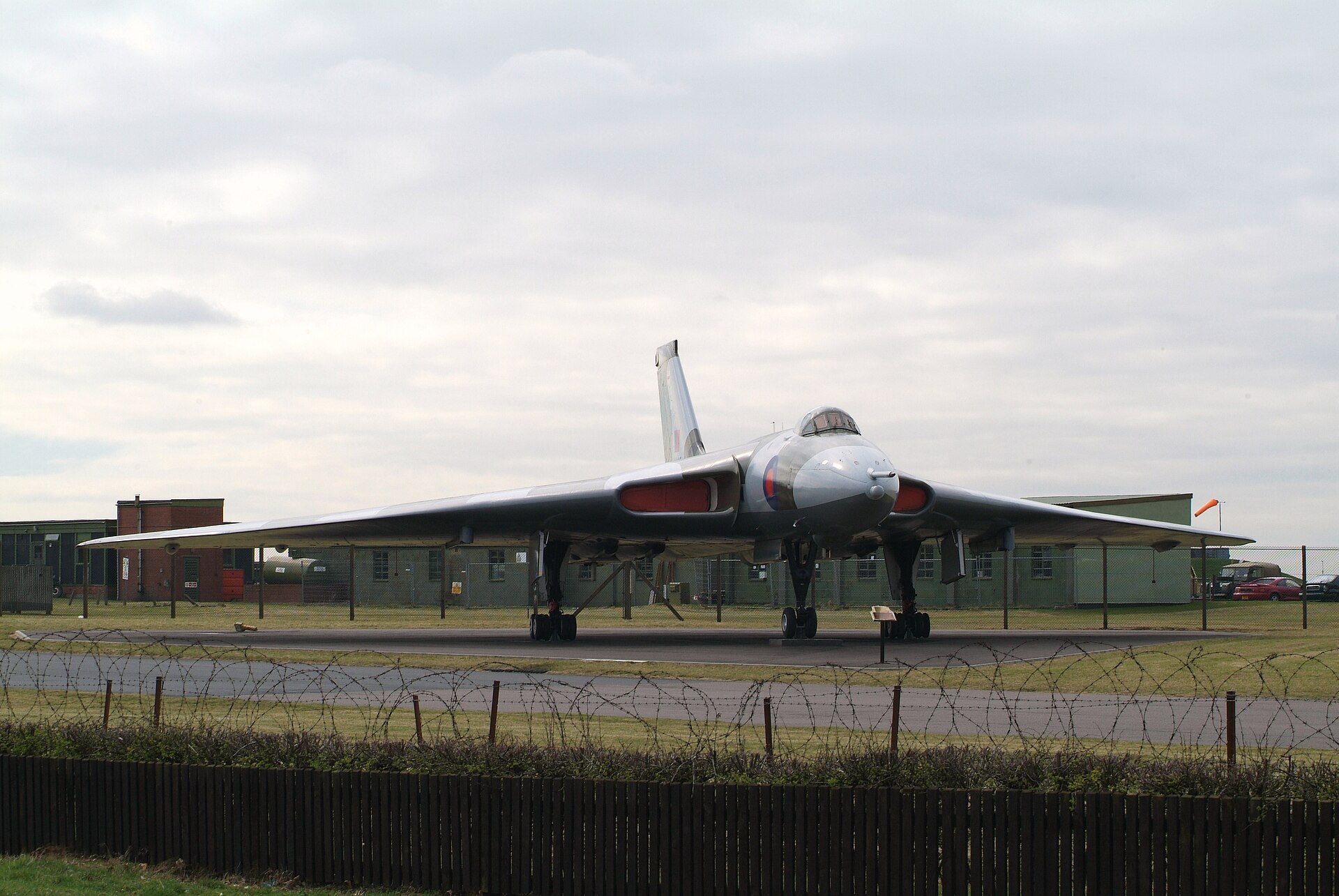
The Vulcan was a station aeroplane. Individual crews belonged to squadrons; squadrons belonged to wings; wings sat on a short list of airfields that still ring bells for anyone who grew up with the V-Force in the next county.
Principal UK bases
- RAF Waddington — the name most associated with the type, first and last operational home of B.2 bombers, and still the site of XM607.
- RAF Scampton — 617 Squadron’s Vulcan years and later No. 27 Squadron’s MRR aircraft; also a Blue Steel base.
- RAF Cottesmore — early B.2 wing.
- RAF Finningley — OCU and training associations.
- RAF Honington and others held Vulcans as the force was reshuffled in the 1960s and 1970s.
Dispersal airfields, used in exercises and intended for war, spread the force beyond those famous names. The point is explained in the QRA essay.
Squadrons (a working list)
Bomber and associated units that flew the Vulcan include Nos 9, 12, 27, 35, 44, 50, 83, 101 and 617 Squadrons, plus No. 230 Operational Conversion Unit. Not every number was current at once; squadrons formed, moved and disbanded as the V-Force was reorganised. No. 27’s later MRR years and No. 50’s K.2 tanker years are role footnotes that matter to serial hunters.
Overseas
Near East Air Force detachments at RAF Akrotiri in Cyprus put Vulcans on a warmer runway and a different map. Far East deployments occurred in the type’s earlier years. The aeroplane’s range and AAR made it a tool of British presence as well as of nuclear planning.
If you are decoding a photograph, squadron markings on the tail or intake are more reliable than a guess from the airfield in the background. The serials and markings guide helps with the next step.