
Terrain-following radar on the Vulcan B.2
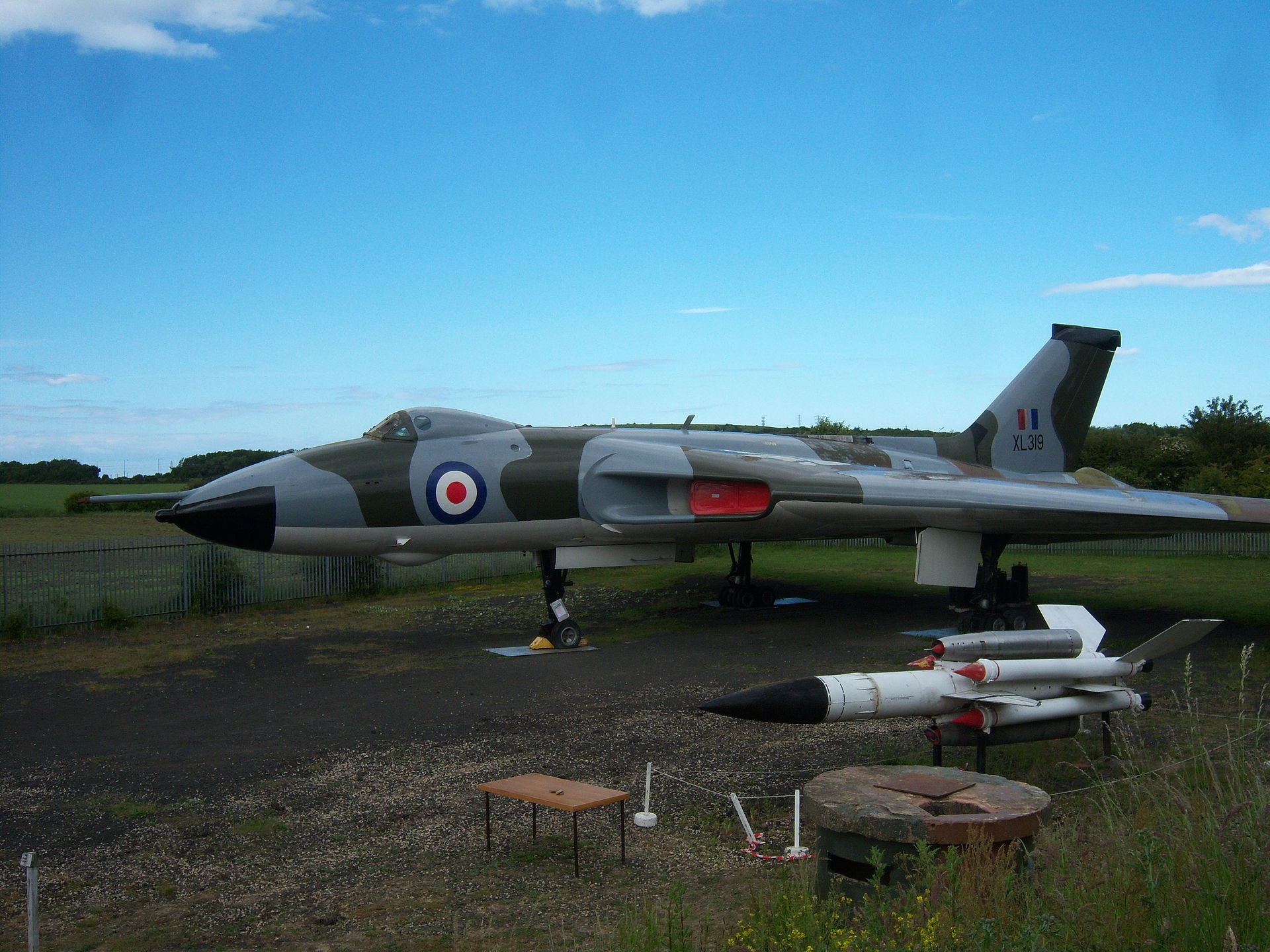
The small “thimble” on a late Vulcan’s nose is easy to miss if you are looking at the delta. It is one of the most important bumps on the aeroplane. It housed a terrain-following radar (TFR), added when the V-Force was driven down from the stratosphere into the weeds by Soviet surface-to-air missiles.
Why it was fitted
High-altitude bombing assumed you could fly above the defences. By the early 1960s that assumption was dying. Low-level penetration — using hills, clutter and the curvature of the earth to hide from radars — became official policy. A bomber flying at a few hundred feet needs to know what the next ridgeline is doing. Visual flying in cloud and darkness would have killed crews. A forward-looking radar that could command a climb or a descent was the engineering response.
TFR did not replace H2S. H2S still mapped the ground for navigation and bombing. TFR looked ahead along the track and fed flight-director commands so the pilots (and the automatic systems, within limits) could hold a selected clearance height over rising ground. The two radars had different jobs, different aerials and different failures.
The thimble
The TFR aerial sat in a removable thimble radome on the very front of the nose, typically beneath the in-flight refuelling probe on B.2s so equipped. Some later role conversions — notably certain MRR aircraft — had the thimble omitted. If you are identifying a preserved airframe, the presence or absence of that small cone is a useful clue to the last role, not a proof of mark.
What it felt like to use
Low-level Vulcan flying was physically hard. The air is thick, the ride is harsh, and a 200,000 lb delta is not a fast jet. TFR reduced the odds of flying into a hill in IMC. It did not make the ride comfortable, and it did not make the aeroplane invisible. It was a tool for a tactic that itself was a compromise: better to risk fatigue and fighters at low level than SAMs at 50,000 feet.
The wider story of that compromise — paint, tactics, airframe life — is in From high altitude to low level.
| Role | Forward-looking clearance of terrain at low level |
|---|---|
| Location | Thimble radome on the nose of equipped B.2s |
| Era | Fitted as the V-Force recast for low-level penetration in the 1960s |
| Not to be confused with | H2S in the main nose radome (mapping and bombing) |