
Vulcan variants: B.1 to K.2
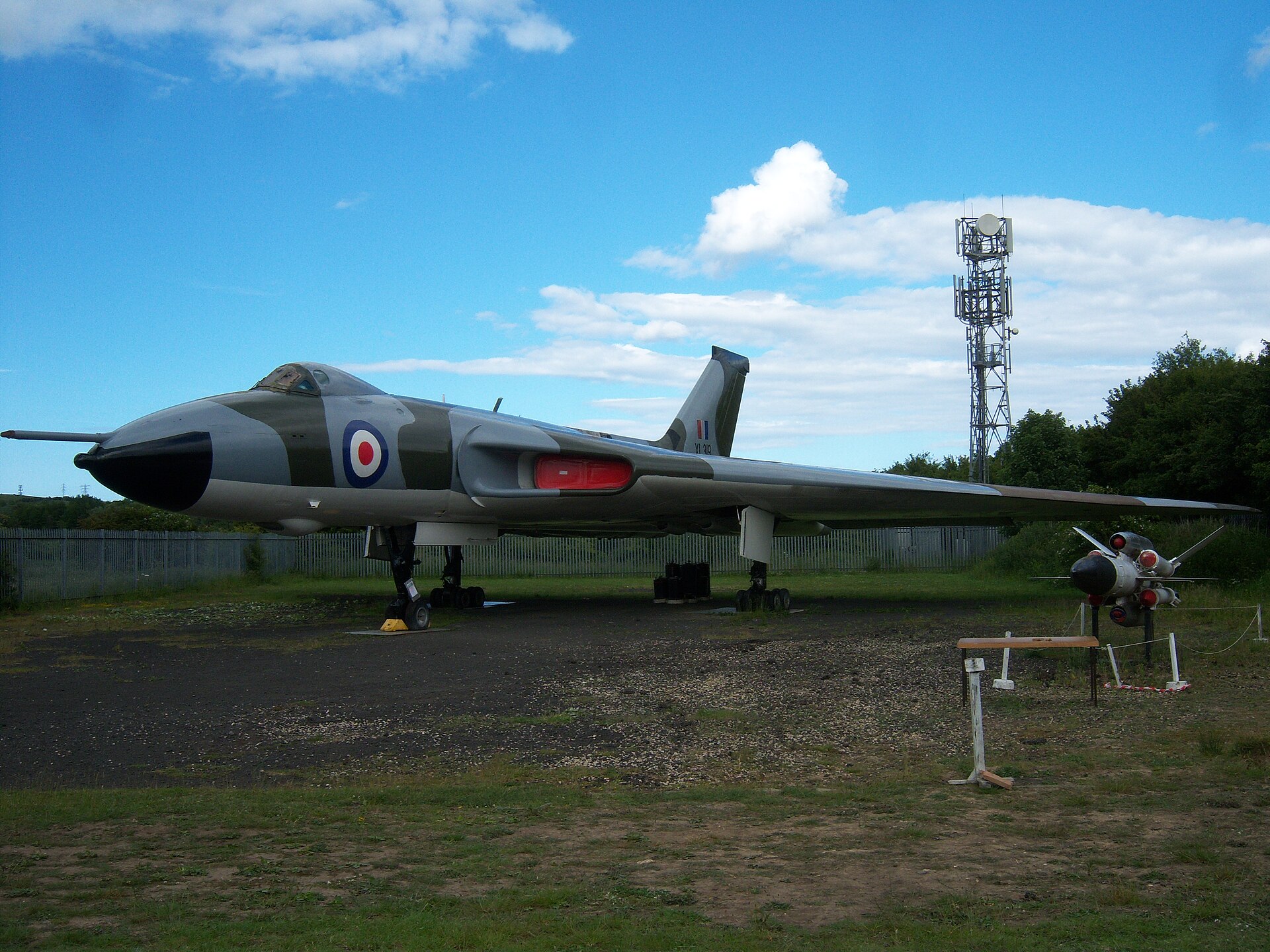
People say “the Vulcan” as if there were one. There were marks, sub-marks and role conversions. The silhouette stayed; the engines, wing, electronics and plumbing did not.
Prototypes
VX770 flew first, in 1952. VX777 followed as a more representative second prototype. Neither is a museum-complete survivor in the sense visitors mean. They were the development aeroplanes that made the production bomber possible — see design and development.
B.1 and B.1A
The B.1 was the initial production bomber: Olympus 101/102/104 series engines, the original wing, and an NBS-centred electronics fit. Forty-five were built. The B.1A designation covers aircraft given a much improved ECM installation in a larger tail fairing. By the mid-1960s the B.1s were leaving the front line as B.2s took the nuclear role and fatigue and electronics made the earlier mark less useful.
B.2
The B.2 is the Vulcan of memory: larger wing with a kinked leading edge, Olympus 201 engines and, on later aircraft, Olympus 301s of 20,000 lbf class, a stronger electrical generation system, and the capacity for Blue Steel. Eighty-nine were built. Terrain-following radar, improved ECM and the whole low-level recast happened on this airframe. If you are looking at a photograph taken after about 1960, you are almost certainly looking at a B.2.
B.2 MRR
A handful of B.2s were converted for maritime radar reconnaissance with No. 27 Squadron. Look for the missing TFR thimble on some airframes, LORAN-related kit, and underwing sampling pods in period pictures.
K.2 tanker
After the Falklands, six B.2s were converted to K.2 in-flight refuelling tankers and flown by No. 50 Squadron until 1984. They were a stopgap while the tanker force recovered. A K.2 is a B.2 with a hose-drum unit and the associated fuel plumbing — still a delta, now a flying petrol station.
| B.1 | Initial bomber, 1956 service, 45 built |
|---|---|
| B.1A | B.1 with enlarged ECM tail fit |
| B.2 | Definitive bomber, 89 built, 1960 service |
| B.2 MRR | Maritime radar reconnaissance conversions |
| K.2 | Six post-Falklands tankers, retired 1984 |