
1952 · first flight of VX770
History of the Avro Vulcan
A British strategic bomber born of Specification B.35/46, flown as a pure delta, then recast for low level, stand-off missiles and — once — a conventional war in the South Atlantic.
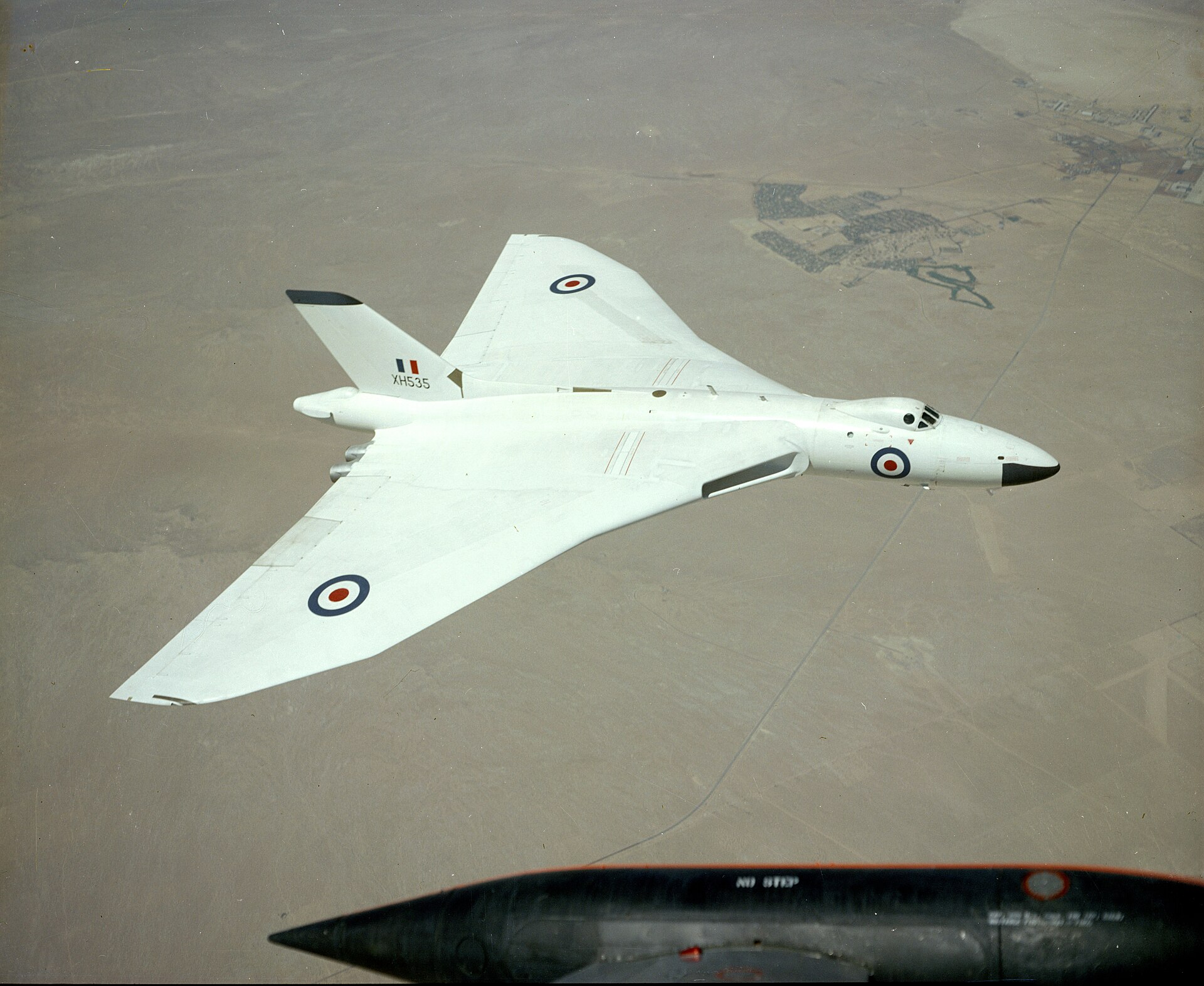
Vulcan B.2 near Edwards AFB, 10 July 1961. U.S. Air Force photograph, public domain.
The Vulcan was never only a shape. It was a production programme at Woodford, a deterrent posture in Lincolnshire, and a set of radar and bombing equipment that had to keep working as Soviet defences improved. The essays in this section follow that arc.
- 1947Avro takes on a jet bomber to Specification B.35/46. Roy Chadwick is killed in the Tudor crash; Stuart Davies leads the Type 698 forward.
- 1952Prototype VX770 flies on 30 August from Woodford, Roly Falk at the controls.
- 1956Vulcan B.1 enters RAF service. The V-Force — Valiant, Victor, Vulcan — becomes Britain’s airborne nuclear deterrent.
- 1960B.2 with more powerful Olympus engines, larger wing and a fuller electronics fit reaches squadrons.
- 1963–66Skybolt cancelled; Blue Steel in service; the force drops to low level as SAMs mature. Terrain-following radar appears on the nose.
- 1969Royal Navy Polaris takes the strategic-deterrent lead. Vulcans remain in the tactical nuclear and conventional roles.
- 1982Operation Black Buck: Vulcans flying from Ascension Island attack Port Stanley and Argentine radars.
- 1984Last bomber and tanker squadrons disband. The type leaves front-line RAF service.
- 2008–15XH558, restored to flight by a civilian trust, displays; last flight 28 October 2015.
Essays in this section
- Design and developmentType 698, the 707 research aircraft, prototypes VX770 and VX777, and the jump from B.1 to B.2.
- The V-ForceHow Valiant, Victor and Vulcan shared a deterrent, bases, and a common nuclear vocabulary.
- Service life, 1956–1984Squadrons, camouflage, the move to low level, and the last years as a tanker.
- XH558 and preservationThe last flyer, gate guardians, and the airframes you can still visit.